
CITY OF PHOENIX V. GONZALES, (ARIZ. CT. OF APPEALS, FEB. 2026)
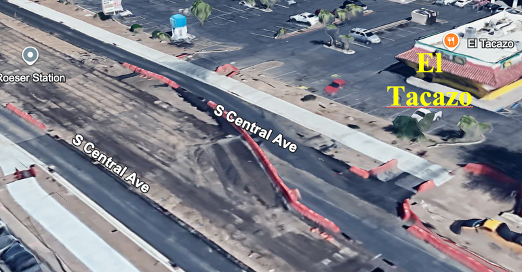
AIMS: Plaintiff, the City of Phoenix, condemned Defendant Gonzalez’s frontage of property to develop a new light rail station and revise street utilities and layout. The parties agreed on land value, but the City refused to pay Gonzalez on her alleged claims for remainder damages.
EVIDENCE: Gonzales owned property on Central Avenue and operated the El Tacazo restaurant. The City condemned approximately 1,000 square feet for a new light rail project in 2021, extending the new light rail down the center of Central Avenue and locating the new station in front of El Tacazo. In doing so, the City proceeded with its plans to completely redesign and construct a new street layout. The Parties stipulated a $18,264 value for taken land and $527/year for temporary easement. But Gonzalez demanded $594,960 in remainder severance damages based on anticipated increase in crime because of putting a light rail station in front of the restaurant, and because of unmarketability of the property during the construction period that would completely tear up the street in front of the business for a long period of time. Gonzalez provided expert witness testimony in support of her claims.
COURT RULING: The Court looked closely at the testimony of the expert as to the alleged remainder damages, and reminded that “Games of ‘let’s pretend,’ should play no part in condemnation cases.” For the increased crime claim, the Court noted that the Expert failed to rely on any actual area crime statistics, sales data, or his professional experience, and instead merely generalized from unrelated internet articles while conceding uncertainty and testifying with statements such as “difficult to assess” and “time will tell”. The Court found the testimony to be speculative, remote, and insufficiently supported with fact or data. For the construction delay claim, the Expert provided only speculation using qualifying language like ‘conceivably,’ ‘may,’ and ‘potentially,’ and without any supporting data grounded in legal standards. Further, the Court ruled that any factually supportable damages the Expert did calculate were non-compensable because they were either business income losses or the result of the City’s proper exercise of its police power to work on the street. The City wins.
POSADA INV., INC. V. ELIAKIM ENTERPRISES, LLC, (PENN. SUPER. CT., FEB. 2026).
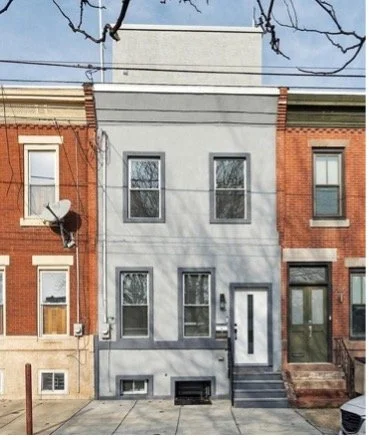
AIMS: Homeowner sues Contractor for breach of contract, negligence, fraudulent misrepresentation, and unjust enrichment.
EVIDENCE: The Homeowner had just purchased her townhome and hired the Contractor to completely remodel it within a 7-month period. Homeowner paid the Contractor $230,000 to manage the property rehabilitation. Unfortunately, the Contractor proceeded to pay the entire amount to a subcontractor who performed extensive defective work, including large gaps around window frames, water infiltration into exterior stucco, uneven floors, improper roof deck slope, and more. The Subcontractor abandoned the project and claimed issues of incorrect blueprints and disputes with the Contractor. The Homeowner eventually fired the Contractor after giving them many months to try to alleviate the failures of the Subcontractor. The Homeowner worked with new contractors who determined that all the Subcontractor’s work had to be removed and redone. The Homeowner proceeded with replacement work that cost $299,785. The Contractor disputed the amounts as excessive and claimed that the Homeowner did not mitigate damages, such as by acting as her own general contractor without any experience in doing so, and delaying new work for more than a year after firing the Contractor, and thus experiencing large price escalations.
COURT RULING: The Court applied the law governing construction contract breach damages, which essentially involved a determination of the reasonable cost to complete and correct the damages. It considered whether the replacement work was clearly disproportionate in cost as compared to market value, but in doing so, pointed to the defendant Contractor as having the burden to prove otherwise. The Contractor failed to put forth sufficient evidence of any such disproportionality to market value and therefore failed to meet their burden to prove otherwise. The Court then relied upon the Homeowner’s detailed testimony, along with documentation, and expert evidence adequately supporting the damages calculation. Homeowner wins $299,785.
BROWN V. DZIUK, (CALIF. SUPERIOR CT. DEC. 2025).
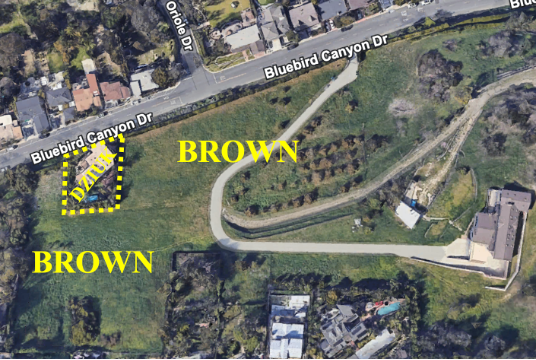
AIMS: Plaintiff property owner Brown sued his neighbor Dzuik for quiet title concerning disputed property that was enclosed by a fence around Dzuik’s property, and that extended past the boundary into Brown’s property.
EVIDENCE: Brown owned multiple properties that surrounded Dzuik’s property. Brown owned the properties since 1993. The chain link fence and boundary improvements surrounding Dzuik’s adjacent property encroached about 700 square feet onto Brown’s property since before 1993. Brown was aware of the encroachment and recorded a Notice of Consent in September 1997, allowing continued permissive use subject to revocation. However, Brown never took any steps to remove or relocate the encroaching fences and improvements off his property. Dziuk purchased his property in March 2021 after receiving seller disclosures about the encroaching boundary issues and a written demand notice letter from Brown in August 2020 stating, “Existing Fences are not on property Lines.” Brown had used the 2020 letter to revoke his consent and make Dzuik aware of it. Dzuik nonetheless proceeded to buy the property in 2021. Brown then sued Dzuik in November 2022. Expert testimony valued encroached area at between $17,500 - $22,564.
COURT RULING: Dziuk had tried to defend largely on testimony that he had not received the notices. Yet, no less than four times within the Court’s written opinion, the Court states that it “did not find Dziuk’s testimony credible.” Instead, the Court found that Dziuk was not an innocent encroacher because he had actual notice through seller property disclosures stating fences were not on property lines, had participated in discussions about moving the fence to the true boundary, and had received Brown’s 2020 demand letter before purchasing. Therefore, the Court found that Dziuk’s maintenance of encroaching retaining walls, stairs, and planters after 2020 consent revocation was not innocent. The Court determined that the recorded Notice of Consent provided both actual and constructive notice that use was permissive and revocable. Since encroachment was not innocent, no balancing of hardships was required under any equitable easement doctrine. The Court gives judgment to Brown on all counts, permanently enjoining Dziuk from interfering with Brown’s property, authorizing Brown to remove all encroaching improvements and erect a new fence, and awarding Brown costs as prevailing party.
Written By: Sean Rieger | Attorney at Law
